

Paperbark Conversations - Menopause & Perimenopause

Updated: Jan 21, 2024
The Shed - Community Refuge

On 10 October, we all snuggled down in our warm coats, jumpers, rugs and beanies with a lovely warm cuppa and a yummy slice at The Shed - Community Refuge to educate ourselves on the topic on menopause & perimenopause. With that many menopausal women in the room you'd think it would soon warm up and it did, as did the discussion.
A huge thankyou to Nya and the Community Refuge team for unhesitatingly offering us The Shed when our other venue arrangements fell through. It may have been a bit on the cold side, but with forewarning everyone came prepared and Nya was on hand to offer blankets to anyone who needed one.
Thanks also to our fabulous volunteers behind the scenes, who helped make sure the evening ran smoothly - Jo, Karen, Jeff, Delia and Abby.
We normally cap our numbers for Conversations events at around 60 to generate a more intimate atmosphere where people feel comfortable asking questions. This time, we increased our numbers slightly to 70, but still sold out with 3 days to go!
Menopause & perimenopause is such a huge and important topic, but it doesn't get the attention it warrants. We were really pleased to see that so many community members were keen to come along and absorb all the information available.
It’s always lovely to be with people who are interested in taking charge of their own health and wellbeing, and that Tuesday night was no exception. This commitment was matched by the wonderful practitioners, who volunteered their time as they have a passion for sharing what they know with the public to help people make informed choices for themselves and their families.

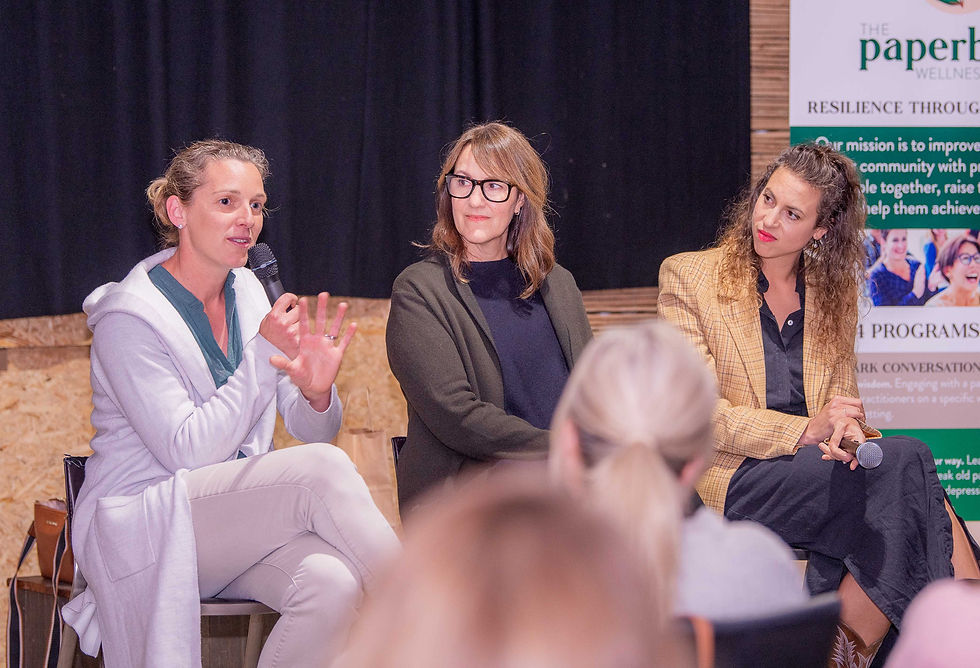
From left to right: Amee Rice (physiotherapist), Dr Candy Leeb (GP), MC Genevieve Morrissey (counsellor and Coordinator of The Paperbark Wellness Project) and Emma Chapman-Sharp (naturopath).
There was a lot to take in, with a ton of wonderful information shared by the panel and a number of audience members. So, this blog recaps that information and fleshes it out with other resources.
Introduction
If there is one thing that this event and this blog seek to press home, it's the importance of becoming fully informed about your own health, and especially your hormonal health. This area of medicine, with its huge impact on mental health and wellbeing, has received too little attention for far too long.
Do your research, read everything you can, and attend all the conversations and symposiums that pop up in your neck of the woods because there are now lots of fabulous people doing wonderful work and explaining the latest research so that you can make informed decisions about what is best for you.
This blog endeavours to start you on that journey or, if you attended our event, take you further along the journey by providing you with lots of links and connections to people who have been working overtime to bring their research and their clinical experience of women's health into the spotlight.
There is a lot of information here, so bookmark it and take your time to work your way through it. We think you'll find yourself quite surprised about just how much information is actually out there now compared to what we see through our normal media outlets.
Contents (quick links)
The terms 'menopause' and 'perimenopause'
Menopause occurs when a woman has her final menstrual period. In the majority of cases, this happens naturally between the ages of 45 and 55, with the average age of onset at around 51 years of age. Menopause is considered early when it occurs between 40 and 45, and premature menopause may take place before the age of 40 for natural reasons or as a result of medical intervention.
If you are someone who has gone through premature menopause (under 40), for whatever reason, it is really important that you are connected to healthcare practitioners who are across the latest research and treatment protocols as there are increased risk factors associated with the loss of oestrogen and other important hormones. We recommend watching this video on early and premature menopause by Dr Louise Newson, a UK GP and renowned menopause specialist.
The removal of both ovaries (bilateral oophorectomy) before a woman has gone through her natural menopause is called surgical menopause. In this case, menopause occurs abruptly, on the day of the surgery. and requires pre- and post-operative guidance and immediate specialised hormone replacement therapy. We recommend that you watch Dr Louise Newson's video on How Surgical Menopause Affects Hormones and read her article on Surgical Menopause.
These days, women live around one third of their lives after menopause on average, so it is vital that both physical and mental health are optimised during this phase.
Perimenopause is the transitional phase that precedes menopause. It is characterised by hormonal fluctuation, anovulatory cycles, the onset of cycle irregularity, changes in flow and often other symptoms. Some women experience menopausal symptoms for 5-10 years before their final period.
In terms of reported symptoms, there is a continuum from no symptoms at all (20% of women) all the way to a living nightmare (20%), with most women (80%) experiencing some symptoms within this transitional phase.
Key symptoms
Some common symptoms of perimenopause and menopause:
Hot flushes & night sweats | Urinary issues | Headaches |
Disturbed sleep | Memory changes | Sore breasts |
Bodily aches & pains | Unwanted hair growth | Weight gain |
Mood swings | Thinning of scalp | Vaginal dryness |
Loss of libido | Skin changes | Irregular periods |
Our panellists were eager to stress that the best way to manage your perimenopause and menopause is through a holistic approach. You may want to ask a couple of healthcare practitioners to help you navigate your way through the information that is out there as not all of it is reliable or suitable for you. It is important to find the right people, to feel comfortable having a conversation about what is happening for you and to feel heard.
If you need to find a GP or would like to change from the one you already have, ask around. Not all doctors can be across the complexity of menopause, but many have more than a keen interest in it and will be up on the latest information and studies.
The same would go for finding a naturopath and other holistic practitioners. Find someone with the right women's health and menopausal/hormonal qualifications and experience, and this region has quite a few. Ask around.

SFI Health has compiled a handy informational read about talking to your healthcare practitioner about menopause.
Dr Louse Newson's The Menopause Charity has a symptoms checklist (PDF) which could be helpful to take with you to your doctor and a PDF on How to ask your GP for help.
While women have over 50 different hormones, the three that are the main players in perimenopause and menopause are oestrogen, progesterone and testosterone. Having these in the right balance in your body as you navigate your way through this stage of life can be a very tricky business and the key to lessening any symptoms you experience.
The Hormone Repair Manual by naturopathic doctor Lara Briden is the go-to for both Dr Candy and Emma when empowering their clients to understand the complexities of perimenopause and menopause. Lara calls perimenopause the 'second puberty' due to the way in which it too causes oestrogen to cycle up and down all over the shop.
We also recommend you watch the following interview by neuroscientist Dr Ben Webb: Managing Perimenopause and Menopause with Dr Louise Newson.
Our panel was keen to stress that if you find yourself experiencing any symptom to a level of discomfort that interferes with the way you go about your day, then you need to find healthcare practitioners who can help you work out a protocol that is right for you.
It is also worth noting that (peri)menopause and thyroid disorders can mimic each other, with many leading symptoms in common. A good healthcare practitioner will be able to help you distinguish between the two.
Other useful resources:
The Evernow Menopause Study (article)
Breaking Down The Hormonal Transition of Menopause | Functional medicine expert Dr Mindy Pelz in conversation with Lara Briden (video)
Do This Before Bed & Burn The Belly Fat - How To Lose Weight After 40 | Don't be put off by the title! This is a great conversation between Dr Mindy Pelz and GP Dr Rangan Chatterjee. (video)
Balance app | Dr Louise Newson. "Who is balance app for? The Balance app is tailored for perimenopausal and menopausal people so they can understand more about their menopause. However, anyone who would like to improve their knowledge of the menopause is encouraged to download it." This app was recommended by an audience member, who loves it, and it's FREE!
HRT (MHT)

There is so much information about Hormone Replacement Therapy (HRT), now called Menopausal Hormone Therapy (MHT), that it can be hard to get your head around it all.
A study, the Women's Health Initiative (WHI), released in 2002 reported an increase in side effects from MHT, causing its use to drop drastically around the world. This study has now been debunked, and MHT has steadily regained its place as a first-line treatment protocol for women in perimenopause and menopause, with newer studies showing that MHT has a beneficial effect in younger women or in early postmenopausal women.
A take-away from our discussion of MHT was that the safest way to take oestrogen is through the skin as a patch, a gel or a spray so that it is absorbed through the skin into the bloodstream and does not have to be metabolised, digested and broken down by the liver, which is the case if you take it as a tablet. Oral oestrogen has been implicated in an increase in blood clots and strokes.
Dr Louise Newson comments on the Women's Health Initiative study in the video interview conducted by Dr Ben Webb mentioned above in this blog. She says that there were some positives that came from further analysis of the WHI study: "They found that when women were under 60 and started HRT they actually had a lower risk of heart disease, osteoporosis, dementia, so all the things that we know now, great. They also showed that women who carried on taking HRT for 18 years... actually have a lower risk of death from all causes including from cancer, so they are less likely to die from breast cancer and all the other diseases as well."
She goes on to say: "If you look at the worst figures that are going around and look at the magnitude of risk, which is really important because a number means nothing to you as a patient - you want to know what is it for me - the magnitude of increased risk is less than the risk a woman has of developing breast cancer if she drinks a couple of glasses of wine a night, if she is overweight or does no exercise because those lifestyles will increase risk of breast cancer."
Other useful resources:
Understanding the major long-term benefits of HRT | Newson Health (fact sheet)
Understanding the risks of HRT | Newson Health (fact sheet)
What Is Bioidentical or Body-Identical Hormone Therapy? | Lara Briden (blog)
The benefits of oestrogen following menopause: why hormone replacement therapy should be offered to postmenopausal women | Medical Journal of Australia (article)
Risks and Benefits of MHT | Australasian Menopause Society (information sheet)
Estrogen Matters | Avrum Bluming, MD, and Carol Tavris, PhD (book); recommended by Delia, one of our volunteers
Bone density
It cannot be overstated just how important it is to go into menopause with good bone density, as Amee is keen to stress. Menopause significantly speeds up bone loss and increases the risk of osteoporosis. We reach our peak bone mass in our early 20s, and it is then usually stable until our early 40s. It's then that we start to lose a little bone density, but this loss accelerates in the first 10 years after menopause.
Research indicates that up to 20% of bone loss can happen during this stage and approximately 1 in 10 women over the age of 60 worldwide are affected by osteoporosis.
"Now this doesn’t necessarily correlate with their fracture risk, but it’s important to know that 25% of women who have a major hip fracture after the age of 50 will die in the following 12 months... scary!" (Telehealth menopause clinic WellFemme)
Being a woman is a decided disadvantage when it comes to osteoporosis as menopause is one of the most common causes of osteoporosis. As hormones change to accommodate normal menopausal changes, oestrogen levels start to see-saw and then drop. Since oestrogen helps prevent bones from getting weaker by slowing the natural breakdown of bone, its depletion during menopause significantly speeds up bone loss.

If you are taking any medication, it is important to know about its effect on your bone density so that you can counterbalance this with proactive bone health measures.
Medications that can have an adverse effect on bone density include corticosteroids, antidepressants and proton-pump inhibitors, which are used for the treatment of gastro-esophageal reflux, heartburn and peptic ulcers. Further information on these and other medicines can be found in an article in TopDoctors United Kingdom.
The US National Library of Medicine features an article entitled The use of antidepressants is linked to bone loss, which provides a systematic review and metanalysis of 23 studies and was published in October 2022. Its conclusion was: "Our data suggest that SSRIs [selective serotonin reuptake inhibitors] are associated with a decrease of BMD [bone mineral density]. We aim to raise clinicians' awareness of the potential association between the use of antidepressants and bone fragility to increase monitoring of bone health".
So, what can you do?
Get plenty of vitamin D (diet, sun and supplements) as it plays a major role in supporting the growth and maintenance of the skeleton and regulating calcium levels in the blood.
Have a balanced diet with enough protein and foods that provide essential nutrients, especially calcium, magnesium, phosphorus, manganese and vitamin K.
Get moving. Regular and suitable exercise strengthens bones and muscles. It also improves flexibility and balance, which reduce your risk of falls and fractures. Doing a variety of different exercises is best, including weight bearing and resistance exercises as these are known to be highly beneficial for the preservation of bone and muscle mass.
Know what medications decrease bone density, and if you are taking them have a conversation with your healthcare practitioner about the risks and what you can do to enhance your management of both the risk and the benefit of taking the medication.
Talk to your healthcare practitioner about MHT if you are not on it and you are postmenopausal. Taking MHT is an established approach for reducing the risk for osteoporosis. "Whilst alternatives are available for the treatment of osteoporosis in elderly women, estrogen still remains the best and safest option for prevention, particularly in younger (aged less than 60 years) and/or symptomatic women" (article entitled Prevention and treatment of osteoporosis in women in the National Library of Medicine).
If you smoke and/or drink alcohol, seriously reconsider this as both are known to noticeably decrease bone density.
Mental health & mood swings
It is important to go into perimenopause and menopause with your emotional health in the best possible state, as Genevieve is keen to point out. A lot of women complain of losing the plot in perimenopause for a whole variety of reasons. Their relationship may have changed, they may have teenage children, and often they are approaching the peak of their careers with the added workload that comes with that. If you are struggling emotionally and need some clarity around your situation, consider talking to a counsellor or psychologist.
Many women these days are so overloaded with responsibilities and the demands of everyday living that being exhausted feels like the norm, so when the common symptoms of hormonal imbalance start to present themselves they are often overlooked. These symptoms can start subtly or they may appear with such force that it knocks them right off their feet.

The symptoms that affect mood may include anxiety, agitation, overwhelm, disinterest, lack of motivation, depression, sleep disturbance, brain fog and memory loss. These symptoms are often ignored by women who are used to just getting on with things, that is until they suddenly find that they can't complete tasks that they previously had no trouble with. This can cause a loss of confidence.
It is very important to pay attention to these symptoms. Their presentation is not always linked by doctors, psychologists, psychiatrists and other mental health practitioners to perimenopause and hormonal fluctuations. If the latter are implicated in those symptoms and MHT is not part of the treatment, the consequences can sometimes be very serious.
Statistics show that women are more likely to take their own lives between the ages of 45 and 54 than at any other time in their lives.
If you or someone you know is experiencing such symptoms, speak to a doctor and ask them whether the symptoms could be linked to perimenopause. Take an armful of information and questions with you, and take your partner or a good friend as more likely than not your head will be all over the place. If you continue to feel unheard, look around for a doctor who is across the complexity of (peri)menopause and its association with mental health issues.
Useful resources:
Perimenopausal depression – an under-recognised entity | Australian Prescriber (article)
Depression: a major challenge of the menopause transition | Medicine Today. "Menopause-related hormone changes are often missed as a key factor for depressive symptoms among the other psychosocial challenges that many women in their mid 40s face." (pdf)
I Went For A Mental Health MOT Despite Feeling Great, This Is What Happened - It turns out you don't need to be at the end of your tether to need therapy | Huffington Post article by Sarah-Louise Kelly
Menopause can make everything a struggle. So why aren't we talking about it? | Short ABC News video
WOMEN - LET'S TALK MENOPAUSE & HRT !! | Television presenter Davina McCall in conversation with Dr Louise Newson (video)
Neurodiversity & ADHD
Research suggests that menopause can affect neurodiverse women in a number of ways, with symptoms that include intensified sensory sensitivity, problems with emotional regulation and difficulty with executive function, e.g. planning, focusing and multitasking.
A recent study published in the British Journal of Health Psychology found the following: "Some participants who had been able to conceal their autism-related symptom prior to menopause suddenly found it 'impossible to continue to mask their struggles'. Others received their autism diagnosis only after the onset of menopause. One participant stated, 'I believe it was menopause that led me to my ASD diagnosis, as my ASD traits become so much more exaggerated during menopause. I would say that I found out that I am autistic because I’m perimenopausal, because I’ve stopped being able to cope with my life, the life I was able to cope with before'.” (Neurodiversity and Menopause - Elektra Health)
Brain health
MHT and brain health is a hot topic at the moment, with some new studies suggesting a positive protective factor from MHT and others showing a negative outcome.
Useful resources:
Study Suggests Estrogen to Prevent Alzheimer’s Warrants Renewed Research Interest | Weill Cornell Medicine. "In the new study, she [Dr Lisa Mosconi, director of the Alzheimer’s Prevention Program and of the Women’s Brain Initiative and an associate professor in the department of neurology at Weill Cornell Medicine] and her team pooled the data from the 51 prior studies to compare estrogen therapy in mid-life versus late life. While mid-life estrogen—administered alone—was associated with a 32 percent lower rate of dementia, there was no significant lowering of the dementia rate with late-life estrogen." (article)
Leading Neuroscientist Reveals The Truth About The Female Brain | Dr Lisa Mosconi in conversation with Dr Rangan Chatterjee. "Changes in the brain that cause dementia can actually begin in midlife triggered by declining oestrogen during perimenopause. Women's brain health remains one of the most under-researched, under-diagnosed and under-treated fields of medicine. Women are twice as likely as men to develop Alzheimer’s and twice as likely to become anxious or depressed." (video)
Disturbed sleep & night sweats

Two of the most common complaints for women during the menopause transition are sleep disturbances and night sweats. The stress that many midlife women experience can be taken to the next level through an unreliable hormonal cycle that starts to interfere with their sleep quality.
Common causes of disturbed sleep:
Changing hormone levels (hormones involved in sleep include melatonin, cortisol, growth hormone and prolactin)
Vasomotor symptoms (sweating and flushing)
Mood disorders (depression and anxiety)
Abnormalities of the circadian rhythm
Co-morbid conditions (snoring, sleep apnoea, airway obstruction, restless legs syndrome, fibromyalgia and musculoskeletal pain). The National Sleep Foundation reports that women’s sleep apnoea cases can be easily confused with other illnesses like diabetes, anemia, depression, irritable bowel syndrome, menopause, and thyroid issues. This confusion leaves thousands of cases improperly treated. This is especially true for menopausal women as many of the symptoms overlap.
Lifestyle factors (poor sleep hygiene, irregular schedules, caffeine, alcohol, snoring partner).
Common ways of managing this:
Avoid nicotine, caffeine and alcohol, especially in the late afternoon and early evening. These substances can disrupt sleep and lower your sleep quality.
Get regular exercise and try things like yoga, tai chi, breath work or dance or other body movement practices that can help burn off cortisol and lower your stress levels.
Genevieve recommends that you do an honest stocktake of your mental health (if you haven't already done so). Are you anxious or depressed, does your brain cycle through the same persistent stuff night after night? Seek help if this sounds like you because a high percentage of our emotional/mental worries and concerns can be alleviated by sharing our stories. There are lots of ways to do that, from getting online support to making an appointment for counselling.
Develop an easy routine that lets your body know that bedtime is coming. For example, take a bath, listen to music or read. Try some relaxation techniques, such as meditation or deep breathing. If you have a partner, try involving them. It could be useful for both of you.
Develop a routine to get you back to sleep once you wake. This could involve listening to calming talks or yoga nidra meditations through under-pillow speakers. Try not to get out of bed (unless you need to cool down), and don't read your phone or watch TV or do anything that will stimulate you.
Dress in lightweight pyjamas to stay cool at night, or sleep naked. Moisture-wicking exercise clothes are another good option.
Sleeping cool is the way to go, so try setting the thermostat at around 18 degrees Celsius. Place a fan at the foot of your bed to keep the air circulating and cooling.
Going to bed and waking up at the same time every day is a very healthy routine to get into, as is not napping during the day, especially if it's for longer than 20 minutes.
Emma says that there are many supplements and herbal products that are wonderful for promoting sleep. Her top two recommendations are magnesium glycinate and taurine. She also suggests trying a protein-rich snack just before bed.
Useful resources:
How POOR SLEEP Leads To Chronic Disease | Dr Russell Foster, Circadian Neuroscientist at the University of Oxford, in conversation with Dr Rangan Chatterjee. At 4.20 mins he discusses anti-hypertensive medication. (video)
How Sleep Deprivation Looks a Lot Like ADHD | ADDITUDE (article)
Sleep Apnea & Women | mySleep (article)
Sleep Disturbance and the Menopause | Australasian Menopause Society (information sheet)
Our Sleep Blog from a previous Paperbark Conversations evening
Loss of libido & relationships
Typically, (peri)menopause comes along at a time when couples have been together for many years and been through lots of life-changing experiences such as marriage, pregnancy and childbirth, illness, death, managing older parents, changing careers, losing careers and financial hardship.
These life-changing experiences are rarely directly responsible for the breakdown of a relationship. Rather, they expose and amplify existing issues. If the relationship is already struggling, it may not have the resilience to weather the challenges of (peri)menopause, particularly one that is difficult.
On the other hand, if there is still a good level of communication, goodwill and openness, then this could be an opportunity to explore and understand together not only menopause, but also where you'd like your future together to be heading. You may need professional help at this point, but if it gets you both onto the same page about where to go from here, then it is worth it.
For anyone struggling with vaginal dryness, Amee recommends the vaginal moisturiser Replens. She says it has been around for a long time and, while it is not as good as topical oestrogen, it is a good option for women who can't use that. She also recommends the following two low-irritant vaginal lubricants: Olive & Bee (which contains just olive oil and beeswax, so none of the petrochemicals, fragrances or glycerines, etc. that can irritate as well as alter the microbiome) and Beaming Beaver (an aloe vera based, water lubricant that is made locally in Margaret River and also does not contain any petrochemicals, fragrances and glycerines, etc.).
Useful resources:
Where Did My Libido Go? This is a wonderful book by Dr Rosie King. "For many women in long-term relationships, feeling horny is little more than a distant memory. Sex has become just another chore to be attended to in daily life - and in terms of priority it's way down the list. When sex does happen, it's often grudgingly agreed to out of guilt and obligation instead of desire. Many women say they wouldn't care if they never had sex again."
Menopause ruining your sex life? | Jean Hailes for Women's Health. "More than 32% of women aged 40 to 65 experience low sexual desire that causes them personal distress." (article)
Hormonal changes and life stressors around perimenopause can cause women to be less interested in sex. How can we improve a low libido? | WellFemme (article)
The impact of the menopause on relationships | Family Law UK (article)
Menopause and Relationships: A guide for partners | Balance. Written by Dr Louise Newson and Diane Danzebrink (pdf)
Impact of early menopause on relationships | Healthtalk Australia (article and videos)
Navigating menopause together: How partners can help | Jean Hailes for Women's Health (article)
Lifestyle changes that can make a difference
One of the biggest predictors for how well you will fare through perimenopause and beyond is your lifestyle. You really need to look after yourself properly when it comes to sleep, work, diet, alcohol and exercise.
It will not matter how careful your healthcare professional is at weighing up any risk factor for prescribing MHT and other medications if you are not taking care to reduce identified lifestyle risks yourself. Sometimes even the smallest changes can have an impact on your symptoms.
Dr Candy attended a lifestyle medicine conference this year and was very impressed by one of the keynote speakers, Dr Wendy Sweet (PhD), Women's Healthy Ageing Researcher and a Menopause Coach.
Useful resources:
Lifestyle Steps to Heal Your Menopausal Brain | Dr Mindy Pelz in conversation with Dr Annette Bosworth (video)
The #1 Thing Women Over 40 NEED TO KNOW | Dr Annice Mukherjee in conversation with Dr Rangan Chatterjee. Dr Annice discusses the life balance conundrum for the modern woman and how that is wrecking our health. (video)
Diet & cutting out ultra-processed food
Our panellists were in agreement that the diet that works best for most people is a Mediterranean diet full of whole fresh food and very little ultra-processed food. Ultra-processed foods are high in saturated fat, salt and sugar, and really are not healthy for our bodies. They include things like ham, sausages, pies, ice cream, mass-produced bread, sweetened breakfast cereals, frozen meals, packaged soups, fruit-flavoured yoghurts, chips, margarines and other spreads, and carbonated drinks. I think most of us know this, but putting a healthy diet into practice can be a tricky thing if you are running a busy household and have a hectic work life.

The key is to know which foods are the ones that really antagonise your symptoms and which ones soothe them. By growing your knowledge, you'll be able to put together quick and easy recipes that are full of tasty whole food ingredients that suit your needs.
Useful resources:
The Best DIET For The MENOPAUSE | Dr Lara Briden (video)
The Menopause and Food | Dr Louise Newson (video)
Menopause & the Mediterranean Diet | Evernow (article)
What is Low-GI, and Why Does it Matter During Menopause | Australian Menopause Centre (article)
Fast Like A Girl | Dr Mindy Pelz (book); recommended by an audience member
Life habits of postmenopausal women: Association of menopause symptom intensity and food consumption by degree of food processing | ScienceDirect. "More intense vasomotor, sexual, somatic, and memory and concentration symptoms are associated with a higher consumption of ultra-processed foods, whereas those with a higher consumption of vegetables reported lower menopause symptom intensity and a better quality of life." (article)
5 Ways To Identify Ultra-Processed Foods | Dr Chris van Tulleken. “This food interrupts our body's ability to regulate our nutritional intake... When we replace the sugar, protein and fat with synthetic molecules we create this mismatch where what we experience in the mouth doesn’t signal that nutrition arrives and that may be part of the reason that we can’t stop eating. Our bodies are expecting nutrition to arrive, but it never comes." (video)
Ultra-Processed People: The Science Behind Food That Isn't Food | Dr Chris van Tulleken (book)
Ultra-processed foods will damage your brain! | Professor Felice Jacka (video)
Ultra-processed food unwrapped with Henry Dimbleby | Henry Dimbleby in conversation with Dr Louise Newson. "Food is by far the biggest thing making us sick." (podcast)
Unprocessed: How the Food We Eat Is Fuelling Our Mental Health Crisis | Kimberley Wilson, Chartered Psychologist (book)
Artificial sweeteners - should we use them? Artificial Sweeteners Induce Glucose Intolerance by Altering the Gut Microbiota | Australasian Menopause Society (article)
Glucose Revolution: The life-changing power of balancing your blood sugar | Jessie Inchauspé (book), and her website: Glucose Goddess

Alcohol
One of the facts about perimenopause that many women find hard to hear is that alcohol and perimenopause do not go well together at all. It's complex, but basically alcohol is processed in your liver, where it competes for space with hormones like oestrogen that are metabolised there. It throws a large number of other essential chemical-metabolising processes out of whack too. It is also worth remembering that alcohol has a very high sugar component.
Alcohol can have a staggering impact on the health of women. Looking at breast cancer alone, drinking three to six alcoholic drinks a week increases the risk of breast cancer by 15 per cent compared to women who don't drink at all. Women who drink two glasses of wine daily have a 50 per cent increase in their risk of breast cancer.
Lara Briden, author of the Hormone Repair Manual, discovered on her own perimenopause journey that her body simply couldn't handle alcohol, even in the smallest amounts. She, like so many women, found that many of her more troublesome symptoms were reduced greatly or went away if she stopped drinking. She writes about alcohol in her book, Hormone Repair Manual, and in this short Instagram post: Sorry to be the bearer of bad news.
Dr Candy suggests that giving up alcohol is one of the best things you can do to give yourself a better perimenopause.
The good news for those of you who do like to have a drink from time to time is that, once through menopause and out the other side, most women can go back to tolerating small amounts of alcohol.
Experiment with your own alcohol intake by giving yourself a month or even a couple of weeks of being alcohol-free, see if you notice a difference in your symptoms and take it from there.
If you are someone who feels you are alcohol-dependent but would like to give not drinking a go, ask a healthcare practitioner to support you.
Useful resources:
HOW DOES ALCOHOL AFFECT MENOPAUSE AND PERIMENOPAUSE? | HFC (article)
Half a glass of wine a day could increase risk of breast cancer returning | National Breast Cancer Foundation (article)
Limit alcohol. Alcohol use is a cause of cancer. Even drinking small amounts of alcohol increases the risk of developing cancer. | Cancer Council WA (article)
Alcohol and Cancer | Foundation for Alcohol Research and Education (fact sheet)
Connection & contribution

In this age of connectivity, we actually find ourselves more disconnected than ever before, more isolated from the community that surrounds us and lonelier. Our rates of anxiety and depression have never been so high and, even with record amounts of money spent in the healthcare world, mental and physical illnesses have skyrocketed in our communities.
Why? We are, at our core, pack animals. But increasingly we have seen the erosion of our pathways to connect with each other. Gone is the downtime that in the past we spent together as families and extended families. Gone is the connection to community that gave us a sense of purpose. Gone also is our mental downtime, that time where we were bored and let our minds wander, where we were not interrupted by something or someone every two minutes, where we had Sundays off!
We miss the predictability of sitting around as a community chatting to each other at church or a sporting event and then pitching in together when someone needs a hand. We prosper and feel validated if we are a link in the chain of life around us.
Simply put, we need each other as a community to thrive. Relating to other people helps us cope better with the challenges we have.
Many people come to live in this region for the wonderful lifestyle they perceive to be here. But that lifestyle is only here because of people who want to make a difference to their community. There are so many community groups and organisations in this region making a huge contribution to how we live, and they would love to have more people involved with them. Get online or ask around and find one that ticks the boxes that will get you out of the house and out into this community connecting with wonderful people, who will be pleased to see you.

Useful resources:
Together: The Healing Power of Human Connection in a Sometimes Lonely World | Dr Vivek Murthy (book)
Dr Vivek Murthy and Brené Brown on loneliness and connection (podcast)
Longevity Professor: The Key Factors To Stop Decline & Slow Aging After 40! | Medical Gerontologist Professor Rose Anne Kenny in conversation with Dr Rangan Chatterjee (video)
Robert Waldinger: What makes a good life? Lessons from the longest study on happiness. This is a fabulous TED Talk on the Harvard Study of Adult Development. This study revealed the following: "Close relationships, more than money or fame, are what keep people happy throughout their lives... Those ties protect people from life’s discontents, help to delay mental and physical decline, and are better predictors of long and happy lives than social class, IQ, or even genes." (video)
Stolen Focus | Johann Hari. "If you want to get your attention and focus back, you need to read this remarkable book. All over the world, Johann Hari interviewed both the leading scientists investigating why we’re losing our focus and the people developing solutions. He has cracked the code of why we’re in this crisis, and how to get out of it. We all need to hear this message." (praise by Arianna Huffington for this wonderful thought-provoking book)
Johann Hari on the real reason we can't pay attention anymore | The Drum ABC (video)
Johann Hari On Why You Can't Pay Attention (& How To Reclaim Focus) | Johann Hari in conversation with Rich Roll (video)
Connections matter | Beyond Blue (article)
Build Emotional Agility, Avoid Burnout, & The Dangers of Toxic Positivity | Dr Susan David (video)
Why having fun is the secret to a healthier life | Catherine Price TED Talk (video)
Movement
I think most of us know when we are not moving enough. Our body has a way of telling us. Whether we listen to it or not is another matter!
Studies show that movement is one of the best ways to improve our sense of wellbeing and hormonal health as we transition to menopause and beyond. A good way to do that, and to enjoy it, is to join a group of likeminded people.
Useful resources:
The dangers of sitting: why sitting is the new smoking | Better Health Victoria (article)
Moving Beyond Menopause | Women’s Health Education Network. "Menopause has a known and generally negative impact on overall muscle and bone health. It is associated with osteoporosis (bones become weaker and brittle), osteoarthritis (degeneration of joints leading to pain, inflammation and stiffness) and sarcopenia (think muscle wasting or thinning and loss of muscle function). Sarcopenia can happen regardless of your weight or size too. All of these issues are contributed to by the primary driver of menopause – loss of the hormone oestrogen. Poor musculoskeletal health can progress to frailty and an increased risk of falls and fractures which in turn is associated with increased risk of death and other disease." (article)
Maintaining your weight and health during and after menopause | Australasian Menopause Society (fact sheet)
A Longer, Healthier Life Through Exercise After Menopause | WellFemme. "Studies have shown that if you have impaired skeletal muscle function, you are more likely to have poor health. Exercise REALLY is important! Unfortunately, the menopausal transition is often a period of inactivity, decreased fitness and weight gain, when it is a CRITICAL period to initialise and promote physical activity, especially for sedentary women." (article)
Your "Hit List" for Staying Strong After Menopause | WellFemme (article)
Resistance Training: What Is It And Why Should You Do It During Menopause? | Australian Menopause Centre (article)
Contact details for panellists
Dr Candy Leeb: Cape Naturaliste Medical Centre
Emma Chapman-Sharp: The Herbal Emporium
Amee Rice: Central Focus Physiotherapy
Genevieve Morrissey: WholeHearted You Counselling Busselton
Your best support people for before, during and after menopause:
Informed doctors
Naturopaths/dietitians
Counsellors/psychologists
Physiotherapists specialising in pelvic health
Yoga practitioners
Nurturing women's groups
Strong healthy female role models
Photography
Thanks to Abby Murray (Abby Murray Photography) for generously donating her time and taking such wonderful photos.


Comments