

Paperbark Conversations - Depression
- paperbarkwp

- Mar 9, 2023
- 15 min read
Updated: Mar 16, 2023
Busselton Golf Club, 8 February 2023

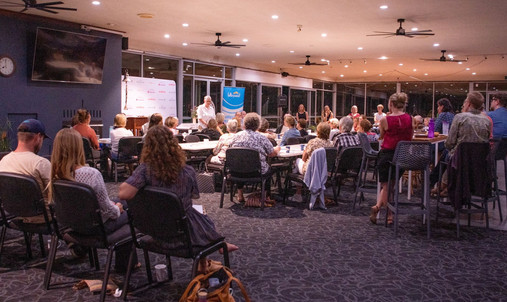
It was lovely to have a full house and lots of audience participation and to once again be at the Busselton Golf Club.
A huge thankyou to all the practitioners who put their hands up to be part of what turned out to be a wonderful evening of sharing knowledge and experiences with the audience, and thanks also to our community who once again put their faith in us to be able to deliver a night full of information, connection and learning.
Plus a big heartfelt thankyou to Jude and the Busselton Golf Club for being a wonderful community mental health supporter and having a fabulous venue that they allowed us to use for the evening. They have a lovely café, so pop in if you are looking for somewhere different to have a cuppa and cake or some lunch. It is open to the general public. Thank you for providing the yummy slices and cake, Colleen.
It’s always great to be in the company of people who are interested in taking charge of their own health and wellbeing, and that Wednesday night was no exception. This commitment was matched by the wonderful practitioners, who volunteered their time to come along and be a part of our Q & A as they too have a passion for sharing what they know with the community to help them make informed choices for their own and their families' health and wellbeing journey.
Our topic was DEPRESSION, and with such a weighty issue it was a pleasure to be in a room full of people who were there either for themselves or for family/friends and keen to hear from our practitioners and to find out what other resources there are in the community. There was a lot to take in, with a ton of wonderful information shared by the panel and a number of audience members. So, this blog recaps that information and fleshes it out with other resources.


Our panellists (left to right) were Dr Katerina Zoetelief (chiropractor), Victoria Martin (naturopath), Heather Lowndes (psychologist) and Dr Sarah Moore (GP), and our MC for the evening was Genevieve Morrissey (counsellor and Coordinator of the Paperbark Wellness Project). More on our panellists can be found below.
Introduction
In the last 10 years there has been an explosion of knowledge about the connection between our autonomic nervous system (which houses our sympathetic and our parasympathetic nervous system), our endocrine system and our digestive system, and this new knowledge is creating change in the way in which the medical world now views the treatment options for mental health issues such as depression and anxiety.
With research that is repeatedly reinforcing this new knowledge comes a sense of hope that there is more that can be done when we, a loved one or a friend are diagnosed with a mental health issue like depression. This whole body approach offers us many more options when seeking help, and in a community like ours there are plenty of holistic practitioners, including GPs, who are willing to work with each other as a team to help you live with or resolve your depression.
Many of us know that a good long walk can clear the day's dross away and that having a supportive family and friends is good for the soul, but up until recently the notion that diet and microscopic bugs floating around in the gut could play such an important role in our mental health was not taken seriously.
Even now, sadly, we are inclined to put our mental health down the list of priorities until we are forced to address it, usually due to exhaustion or an adverse event or health outcome or because our body just simply won't let us get out of bed one morning. It's only then that we start to really understand just how vital mental wellbeing is.
One of the cruel ironies of depression and other mental health issues is that by the time we get to this crisis point we have lost our ability and energy to practise any sort of critical thinking.
Depression is a very wide topic, and the point of our evening was to touch on many of its causes and to convey to our audience that support for living with depression or even resolving depression can be found at a community level. A 'one doctor plus one psychologist/psychiatrist' approach is not the only pathway. Current research shows us that a whole-person, more rounded holistic approach that includes medical professionals as well as social connection tied in with nutrition and movement is now offering solid hope to anyone living with depression.
The causes of depression
The causes of depression are numerous, and our understanding of how depression moves in and takes hold of us has changed enormously over the last 10 or 15 years.
Johann Hari, writer and journalist and the author of Lost Connections, gives us a list of nine causes of depression (and anxiety). Looking at current research, you would find a general consensus regarding these nine points and, as each year goes by, more and more studies are validating their role in depression.
Cause one: Disconnection from meaningful work
Cause two: Disconnection from other people
Cause three: Disconnection from meaningful values
Cause four: Disconnection from childhood trauma
Cause five: Disconnection from status and respect
Cause six: Disconnection from the natural world
Cause seven: Disconnection from a hopeful or secure future
Causes eight and nine: The real role of genes and brain changes
Dr Sarah Moore and Genevieve Morrissey both recommend you read Lost Connections and also watch the following TED Talk by Johann Hari, in which he shares fresh insights into the causes of depression and anxiety from experts around the world: This could be why you're depressed or anxious.
So, what changes can you make?
Try to lower your stress levels
Stress is no doubt one of the biggest contributors to depression as it has such a detrimental effect on health generally. It doesn't necessarily have to be a big stressor that takes us onto the road to depression. For many people it is the day-to-day little micro-stressors that pile up. eventually becoming a mountain that just seems too hard to negotiate.
We can't always sidestep stress, but we can learn to manage it and our reaction to it. Find out what other people you know do that helps them look after their stress levels, whether that's a mindfulness practice or some form of movement, etc.
Take a mental health course
As we mentioned on the night, PWP runs an adult psycho-educational course called Hello To Me (video and more info), and our next one starts on 2 May at 6.45pm.
Hello To Me is an 8-week prevention and early intervention mental health program that is open to adults of any age and gender. It is designed to facilitate growth in our most basic emotional and cognitive needs by providing new tools and skills. It is aimed at anyone who is feeling stuck, numb, unfulfilled, stressed, anxious, directionless or lacking in confidence, for whatever reason, whether that’s in their relationship with other people, in their job or in their life generally.
Dr Sarah Moore also recommends the following online help:
Balance your hormones and improve your thyroid health
Hormones play an important role in regulating bodily functions and can affect a person’s mood. A hormonal imbalance may cause symptoms of depression. Finding out the underlying cause and taking steps to balance and regulate hormone levels may help relieve hormonal depression.
For hormone health, Victoria Martin recommends the following resources:
Lara Briden, in particular her book Hormone Repair Manual
Aviva Romm and her book Hormone Intelligence.
There is conflicting evidence on whether thyroid disorders are linked to depression. One problem that can complicate diagnosis is that depression and hypothyroidism share some of the same symptoms: low mood, fatigue, difficulty concentrating, decreased libido and weight gain.
For thyroid health, Victoria Martin suggests:
Izabella Wentz, the Thyroid Pharmacist, and her book Root Cause.
Deal with your history
Where we have come from, what we have experienced and how we have interpreted that consciously or unconsciously have a major impact on how our mental, physical and emotional body operates now.
Psychology and counselling are very helpful to work through personal and family history. Even if you don't feel like you have a significant issue with your history, getting an objective point of view may be very helpful if you feel like you're going around in circles and ending back at the same place again and again. Family patterns are very sneaky things and can be handed down from generation to generation, keeping us trapped in habitual behavioural and thought cycles.
At this point in time, frustratingly, it is very difficult to find a psychologist or a psychiatrist who doesn't have a lengthy waiting list. If you are struggling to get in to see a psychologist, consider a counsellor or psychotherapist. Their waiting list may be much shorter as they are not within the Medicare system. Nevertheless, they are qualified mental health practitioners who work regularly with clients who experience depression, and many offer their services at a very reasonable price.
Also, as the panel suggested, look around for holistic healthcare professionals who can support you with other areas of your life while you wait to see a mental health professional and, even if you are already seeing one, still consider that option of treating the whole body, not just emphasising one area because other players such as nutrition, sleep and movement, etc. also contribute to our overall psychological wellbeing. We are blessed with many wonderful holistic practitioners in this region, who all play their part in supporting people with depression from a range of modalities, such as naturopaths, kinesiologists, acupuncturists, chiropractors, osteopaths, physiotherapists, sound therapists, and reiki, yoga and pilates practitioners.
Genevieve Morrissey recommends the following resources:
An interview with psychologist Dr Paul Conti about why understanding our history is so important for our mental health wellbeing. Dr Conti is also the author of Trauma: The Invisible Epidemic, a book that contains his valuable insights about how we can collectively heal from trauma’s effects.
A thought-provoking interview with psychiatrist Dr Bessel van der Kolk in which he talks about how our modern medical systems are not designed to deal with chronic health issues and that the one-size-fits-all treatment model does not serve so many people with trauma-induced health issues, fibromyalgia, chronic pain, autoimmune disorders, depression and other mental health matters. What is needed instead is a multi-pronged approach that works at integrating the mind, brain, body and social connections to help us move past our history, to connect back to ourselves, our families and our communities. Bessel's best-selling book The Body Keeps The Score has spent more than 147 weeks on the New York Times bestseller list in the eight years since its publication.
KC Davis' TED Talk How To Do Laundry When You're Depressed. KC Davis is the author of How To Keep House While Drowning and is a licensed professional therapist, author, speaker and the person behind the mental health platform Struggle Care. This TED Talk is a thoughtful and forgiving approach to navigating profound challenges when things just get too much, especially if you have post partum depression.
An interview with physician Dr Gabor Maté on how trauma fuels disease. Gabor has a special interest in childhood development, trauma and its potential impact on physical and mental health.
Back To Topics
Make lifestyle changes
Depression is a highly complex condition to understand and treat even with the assistance of medications that target specific neurotransmitters in the brain. What works as an effective treatment for one person with depression may not work for someone else.
While it's important for researchers to continue to try to understand the mechanisms of depression, including brain chemicals, many are now including lifestyle in the mix as a key component that can also have an effect on our body and brain chemistry. The brain changes according to how you use it and what it has been exposed to. This is known as neuroplasticity.
Heather Lowndes referred on the night to Dr Dan Siegel. He is a Clinical Professor of Psychiatry and a leader in the field of neurobiology, and he is worth checking out. He has published extensively for both professional and lay audiences on brain plasticity and neurobiology. His Healthy Mind Platter highlights what we should put on our mental health platter.
Be mindful of your social media and technology use
There was a consensus on the panel that technology, especially social media, is doing us no favours. In fact, it is doing us more harm than most of us are aware of or prepared to face.
Increasingly, there is compelling data surfacing around the damage that our addiction to technology and social media, particularly for our children, is doing to the state of our mental health, the structure of our relationships, our performance at work and in the fabric of our communities.
Johann Hari's latest book Stolen Focus - Why You Can't Pay Attention is an enthralling read that shows how dreadfully we have become distracted by the many 'screens' we encounter each day. It's as though our ability to pay attention has collapsed, and Johann spoke to many leading researchers from around the world to expose just how bad it has become.
Here is a link to one of the better online video conversations with Johann about his book:
For those of you who haven't seen the chilling Netflix documentary The Social Dilemma, about the rise of social media and its lack of accountability, here's a link to the trailer for it:
The Social Dilemma Documentary, and you can watch the documentary on Netflix.
Nurture your gut microbiome
Around 90 per cent of serotonin, a chemical that helps us feel happy, is made in our gut by our gut microbiota, as is a cornucopia of other fabulous and essential neurotransmitters, vitamins and hormones, and the gut microbiota play a role in the regulation of anxiety, mood, cognition and pain.
Perhaps one of the most profound and exciting changes we have seen in the last 10 to 15 years with regard to depression and mental health generally has been the realisation that the brain/gut/immune system axis can no longer be dismissed.
Felice Jacka, Professor of Nutritional Psychiatry and Director of The Food & Mood Centre at Deakin University, Geelong, has been a leading light in the gut-brain connection for many years through her work at Deakin University establishing diet as a risk factor and treatment target for common mental health disorders including depression. She is the author of the book Brain Changer, which we gave away on the night.
Many studies, including Professor Jacka's, show us that a Mediterranean-style diet leads to changes in the gut microbiome that can now be linked to positive changes in cognitive function and memory. The fibre-rich foods that commonly feature in the Mediterranean diet, such as fruit, vegetables, legumes, nuts, seeds and whole grains are now known to lead to microbial diversity in the colon. And it is this diversity that is believed to support favourable outcomes in overall health, cognitive function and mental health.
Also worth noting is that Professor Jacka's research showed that diets followed by the study groups she was involved with were very reasonably priced if not cheaper than the average Australian diet.
Genevieve Morrissey recommends the following interviews, books and articles:
Professor Jacka in conversation with Dr Rangan Chatterjee - bitesize version
Professor Jacka in conversation with Dr Rangan Chatterjee - long version
Looking to the gut for alternatives to antidepressants - BizNewsTv interview with Dr Ted Dinan, Emeritus Professor of Psychiatry at University College Cork
Psychologist Kimberley Wilson on the importance of brain nutrition - interview conducted by Karl Henry from Independent.ie with Kimberley Wilson, psychologist and author of How to Build a Healthy Brain and the just released Unprocessed: How the Food We Eat is Fuelling our Mental Health Crisis
Body Mental Health with Kimberley Wilson (On Being Audio Podcast) - in this lovely conversation with Krista Tippett, Kimberley walks us through her own life experience and how that shaped who she was to become and why she is so passionate about preaching the Whole Body mental health message
A better diet helps beat depression in young men - University of Technology Sydney, May 2022
9 Physical and Mental Health Conditions That Benefit from a Mediterranean Diet - Psychology Today, March 2021,
Move your body
If there's one thing we can all feel creating a change in our body's chemicals it's movement. No matter how sluggish and tired we feel before we drag ourselves out for a walk or a swim, we do generally feel refreshed and better once we've done it.
Exercise and movement have been a recommended treatment add-on for depression for many years, and now science and technology are able to pinpoint why.
This article from The Better Health Channel in Victoria gives a simple fact sheet outlining why exercise is of such benefit: Exercise and mental health.
Katie Garrett from Katie Yoga in Busselton gave us a great insight into how movement and mindfulness combine when practising yoga. When we commit to a yoga practice or other mindful practices, we are training our brains and central nervous system to be responsive rather than reactive, and this in turn lowers the overall stress levels in our bodies.
Genevieve Morrissey recommends the following resources:
How Walking Improves Our Brain and Mental Health - Prof. Shane O’Mara, neuroscientist and professor of experimental brain research at Trinity College Dublin, interviewed by Dr Rangan Chatterjee - bitesize version
How Walking Improves Our Brain and Mental Health - Prof. Shane O’Mara, interviewed by Dr Rangan Chatterjee - long version
Prof. Shane O’Mara's book: In Praise of Walking: The new science of how we walk and why it’s good for us.
Does Yoga help with Depression? - video by Katie Yoga
Yoga For Depression - article by The Minded Institute
How Movement Can Transform Your Life - Kelly McGonigal, research psychologist, interviewed by Dr Rangan Chatterjee - bitesize version
How Movement Can Transform Your Life - Kelly McGonigal, research psychologist, interviewed by Dr Rangan Chatterjee - long version
How Exercise Changes Your Brain and Reduces Your Risk of Depression - Dr Brendan Stubbs, clinical-academic physiotherapist interviewed by Dr Rangan Chatterjee - bitesize version
How Exercise Changes Your Brain and Reduces Your Risk of Depression - Dr Brendan Stubbs, clinical-academic physiotherapist interviewed by Dr Rangan Chatterjee - long version.
Connect with others
The last thing that we touched on was the huge role that social connection plays in keeping our mental, emotional and physical wellbeing in good order.
Genevieve spoke about the findings of the Harvard Study of Adult Development. This article about the study in the Harvard Gazette is well worth reading. 'Close relationships, more than money or fame, are what keep people happy throughout their lives, the study revealed. Those ties protect people from life’s discontents, help to delay mental and physical decline, and are better predictors of long and happy lives than social class, IQ, or even genes. That finding proved true across the board among both the Harvard men and the inner-city participants.' (extract from The Harvard Gazette, 11 April 2017)
Robert J. Waldinger is the director of the Harvard Study of Adult Development. He has given a fabulous top 10 TED Talk on this study.
We closed out our evening with wonderful connections with various audience members, including several people who were representing volunteer organisations in Busselton:
Cathy Gibson - Coordinator for the Busselton branch of POOPS (Pets of Older Persons)
Cathy spends an eye-watering number of volunteer hours coordinating the older pet owners, dogs and volunteer dog walkers, but has never been happier! When asked who gets the most benefit out of POOPS, it was a tie between the dogs, their owners, the walkers and Cathy. What a fabulous service to have here, and it was obvious that the mental health benefits of an organisation like POOPS are massive. You can connect with Cathy by emailing her at busselton@poopswa.org.au or through the POOPS Facebook page.
Claire McDonnell - Busselton Dunsborough Alliance Against Depression (BDAAD)
Claire gave us an insight into the valuable work that BDAAD does in our community by connecting local people with local advice, resources and support to tackle depression in Busselton and beyond. BDAAD is the work of a group of passionate and committed volunteers whose team includes former psychiatrists, nurses, teachers, chaplains and more. Their mission and purpose is to reduce suicidal behaviour and deaths by suicide in Busselton, Dunsborough and the local environs by improving the mental health of people prone to, or experiencing, depression.
Michelle Shackleton - Volunteer Board Member - Busselton Hospice Care Incorporated Michelle loves her role as a volunteer for Busselton Hospice Care, and her passion for spreading the word about the value of volunteering was obvious. The palliative care volunteers support people admitted to the Busselton Health Campus Hospice Unit with a community presence and ongoing connection to their community. They are present in the Hospice Unit every day of the year to provide companionship, a listening ear or everyday practical help to patients and their care network.
A healthy community thrives when the people who live there, which means all of us, play an active role in it. And it's definitely a two-way thing - more and more research is showing us now that it's one of the top things that you can do to protect your mental health. There are so many different groups and activities in our community that it would be hard not to find one that could be of interest to you, whether that involves volunteering your services or simply engaging with other people as a member.
My Community Directory Busselton is an online platform for people living in or near Busselton to find out what's going on, where to get help and how to join a group. This makes it easy to connect with community-based groups, services and organisations across the city.
Back To Topics
Conclusion
There are 9 primary things that we need to do in order to resolve, live with and help others with depression:
Skill yourself up and learn how to deal better with stressors
Foster healthy social connections and relationships - find your tribe!
Follow a whole foods diet
Move and exercise
Reduce your screen time
Adopt good sleeping habits to restore mind and body - read our blog on Sleep
Deal with your past
Do a job you find meaningful
Take a holistic approach to your health
Depression is not a one-stop-shop issue. There are many wonderful healthcare practitioners in this region successfully working with people with depression on a daily basis. Seek recommendations from friends, family and colleagues. Get yourself a team.
Other resources that might interest you
Mindful Margaret River - an association of volunteers, mental health professionals, government agencies, community representatives and the Shire of Augusta Margaret River working together to promote mental health and wellbeing in the Shire.
How Kindness Can Boost Your Immune System and Change Your Brain - Dr David Hamilton in conversation with Dr Rangan Chatterjee
Breath: The New Science of a Lost Art by James Nestor. This wonderfully entertaining, fact-filled book explores how the human species has lost the ability to breathe properly over the past several hundred thousand years and is now suffering from a laundry list of maladies - snoring, sleep apnoea, asthma, anxiety, depression, autoimmune disease - because of it.
How Breathing Through Your Nose Will Change Your Life - Patrick McKeown in conversation with Dr Rangan Chatterjee
Various holistic health and wellbeing podcasters: Dr Rangan Chatterjee is a British GP with 20 years' experience, who interviews leading health professionals from around the world in his Feel Better Live More podcasts; Dr Andrew Huberman (Huberman Lab podcasts) is a neuroscientist who has made numerous significant contributions to the fields of brain development, brain function and neural plasticity; Rich Roll (podcasts) is a wellness & plant-based nutrition advocate; Krista Tippett is a journalist, author and the creator and host of the On Being with Krista Tippett podcasts, which are dedicated to social healing.
How to contact our panellists and MC
Dr Sarah Moore: Dr Sarah Moore
Victoria Martin: Victoria Martin Naturopathics
Heather Lowndes: BreakThrough Psychology
Dr Katerina Zoetelief: Soul Care Chiropractic
MC Genevieve Morrissey: WholeHearted You Counselling Busselton
Photography
Thanks to Abby Murray (Abby Murray Photography) for generously donating her time and taking such wonderful photos.
A huge thankyou to our volunteers behind the scenes who make our Paperbark Conversations events seamless: Joanne James, Jeff Higgins and Karen Crutchlow.
Photo Gallery




Comments